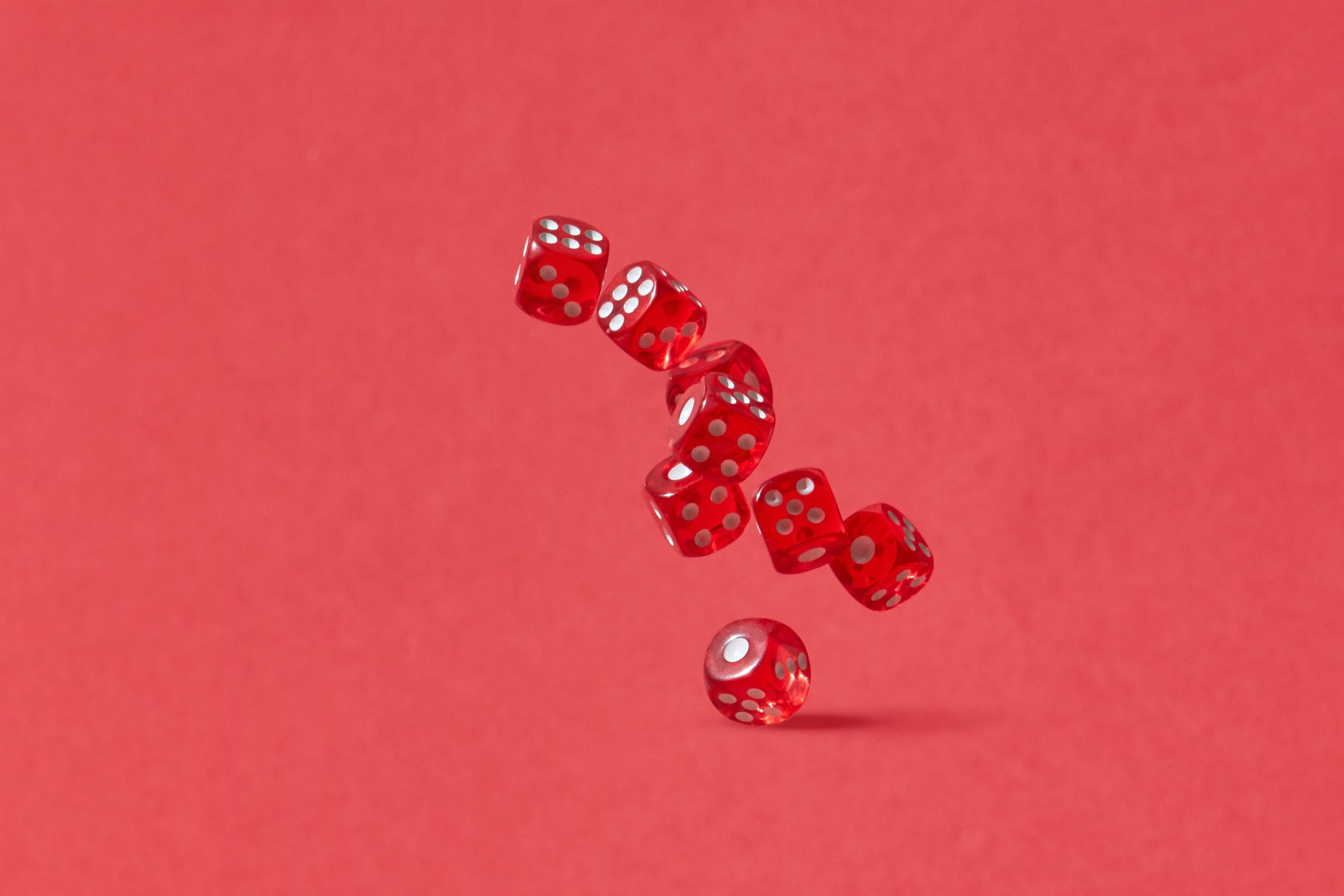
Every player has a story about the boss that never dropped the rare sword, or the chest that gave the same common potion five times in a row. In the moment, it feels like the game is either cursed or rigged. Yet almost everything that looks like luck in digital games is actually a set of probabilities that designers choose on purpose. Understanding those numbers changes how you play, how you judge your results, and even how you decide when a game is worth your time.

Luck Is Really a Probability Distribution
When a game says an item has a 5% drop chance, it is not promising that you will see that item after twenty kills. It is describing a distribution. Over a very large number of attempts, about 5% of kills will produce the item, but any single player can land far from that average. Statistics gives us the language for this: the expected value is the average outcome, and the variance describes how far individual results can stray from it.
Most randomness in games is modelled as a series of independent trials, where each attempt is a yes or no event with a fixed chance of success. Those are the same Bernoulli and binomial models used in quality control and medical testing. Once you see a drop rate as a repeated trial rather than a promise, the outcomes that once felt personal start to look ordinary.
How Random Number Generators Turn Odds Into Outcomes
Behind nearly every drop, critical hit or enemy spawn sits a random number generator. Most of these are pseudorandom, meaning they follow a deterministic algorithm seeded at a particular starting point. The output looks random, but it is entirely predictable if you know the seed and the formula. Developers use this to make games reproducible for testing and to power procedural worlds that look different each time.
For players, the useful insight is that a generator does not remember what it gave you last time in any human sense. Each call is shaped by the math, not by a hidden plan to frustrate you. If you want a deeper look at how these systems work and why players often criticize them, this explainer on RNG in video games covers the basics well.

Randomness in games is designed into the controller’s every button press, not added at random.
Loot Tables Are Built on Weighted Math
A loot table is the simplest place to see probability at work. Each possible reward is given a weight, the weights are added together, and a random number decides which reward wins. If a sword has a weight of 10, a shield has 40 and nothing has 50, the sword drops 10% of the time. Change the weight of “nothing” to 100 and the sword’s chance falls to about 6.6%. Designers tune these numbers constantly, and a small change to one weight can shift the whole experience.
Game developers have written extensively about this, and the basic approach is laid out clearly in Game Developer’s guide to loot drop best practices. The same article points out a problem that pure independent rolls create: a player can, through bad luck alone, go thousands of kills without a particular item. That is why many games add safeguards on top of the raw odds.
Why Players Misread Probability
Human intuition is poor at handling streaks. If a 10% drop has failed nine times, many players feel the tenth attempt is “due.” That is the gambler’s fallacy. Each attempt is independent, so the chance on the tenth kill is still 10%. The opposite error is just as common: a player who gets three drops in a row assumes the rate must be higher than advertised.
Statistics helps here because it gives you a way to test your own experience. A useful question is not “did I get it yet?” but “how many attempts would I need before I could say the rate is different from what the game claims?” Small samples can say very little. Low-probability events need large numbers of trials before the observed rate settles near its true value, which is why community drop-rate data often takes months to become reliable.

Tracking drops over many sessions reveals patterns that a handful of attempts cannot.
Designing for Feel, Not Just Fairness
Pure probability is not always what keeps players engaged. Designers often reshape randomness so it feels fair, even when the average outcome stays the same. Techniques such as shuffled “bags” of outcomes, pity timers that raise the odds after a long dry spell, and guaranteed drops after a set number of attempts all trade a little pure randomness for a smoother experience. Blizzard’s loot systems and roguelike games use these ideas widely.
These choices are not hidden tricks so much as honest design decisions. A 1% drop that never arrives for five hundred kills can make a player quit, even though it is mathematically possible. Adjusting the system so the expected wait is reasonable keeps the game satisfying while preserving the stated odds in the long run.
What This Means When You Play
Treating outcomes as probabilities helps in a few practical ways. You can compare the time you spend on an activity against its expected reward and decide whether it is worth it. You can read patch notes about drop-rate changes and understand their real impact. And you can avoid chasing losses, which is the same trap that affects anyone who misreads odds in any setting.
Digital games also share a lot of their math with other areas where chance is central. Anyone who has looked at how casino games publish their return-to-player figures has seen the same concept in a different form. Readers interested in how those numbers are compared across platforms can explore resources from Crazyvegas, a casino comparison site that reviews operators and explains the odds behind the games they offer.

Players who understand the odds tend to make calmer, more deliberate choices during long play sessions.
Reading the Numbers Before You Grind
Luck will always play a role in digital games, and that is part of their appeal. But the outcomes you see are the product of distributions, weights and generators that someone chose deliberately. Once you learn to read drop rates as probabilities, most frustrating streaks become understandable rather than personal, and the games themselves become a little more transparent. The next time a chest gives you nothing, the useful question is not whether the game hates you, but how the odds were set and how many attempts it would take to know.